Sometimes, we get so overwhelmed with what we don’t have to the point that we become so ungrateful for the many things we have, but have failed to acknowledge.
Having heard or witnessed a number of sad ending of lives in the last few months, my approach to life has changed, and I’m becoming more intentional about being thankful.
First, I tend to stop worrying myself about the next day or some future issues. I just do what I can do and take it one day at a time. The moment I started doing this, I noticed a remarkable difference in my mood, mental health, and overall well-being.
No matter how big an issue is, I just do what can be done today and leave the rest for another day. It has worked for me thus far, and I plan to apply this philosophy to other aspects of my life. I suggest you try it too.
Secondly, I focus more on what I have and what I have been blessed with. Yes, I have needs, but I don’t agitate about them anymore, I simply plan as much as I can within my power. At the end of the day, nothing matters more than your life.
And no matter how important we think we are, people (even the closest to us) would move on, if anything happens to us. That is just how life is designed.
Lastly, stop bothering yourself about what people think, and to be honest, most people don’t even think about what you think they will criticise you for. And even if they do, it is their own cup of tea. Just live your life in a way pleasing to God, that is all that is required of you.
So, my dear friends, simplify your life. One day at a time, practice gratitude, and quit agitating over other people’s opinions.
Where we are today is a product of the behaviors we permitted yesterday, so if we strive for a different tomorrow, we need to start to repudiate certain behaviors now.
I attended a launch event yesterday, and while listening to a former high-ranking State official, I picked up a lesson I believe others might find valuable as well.
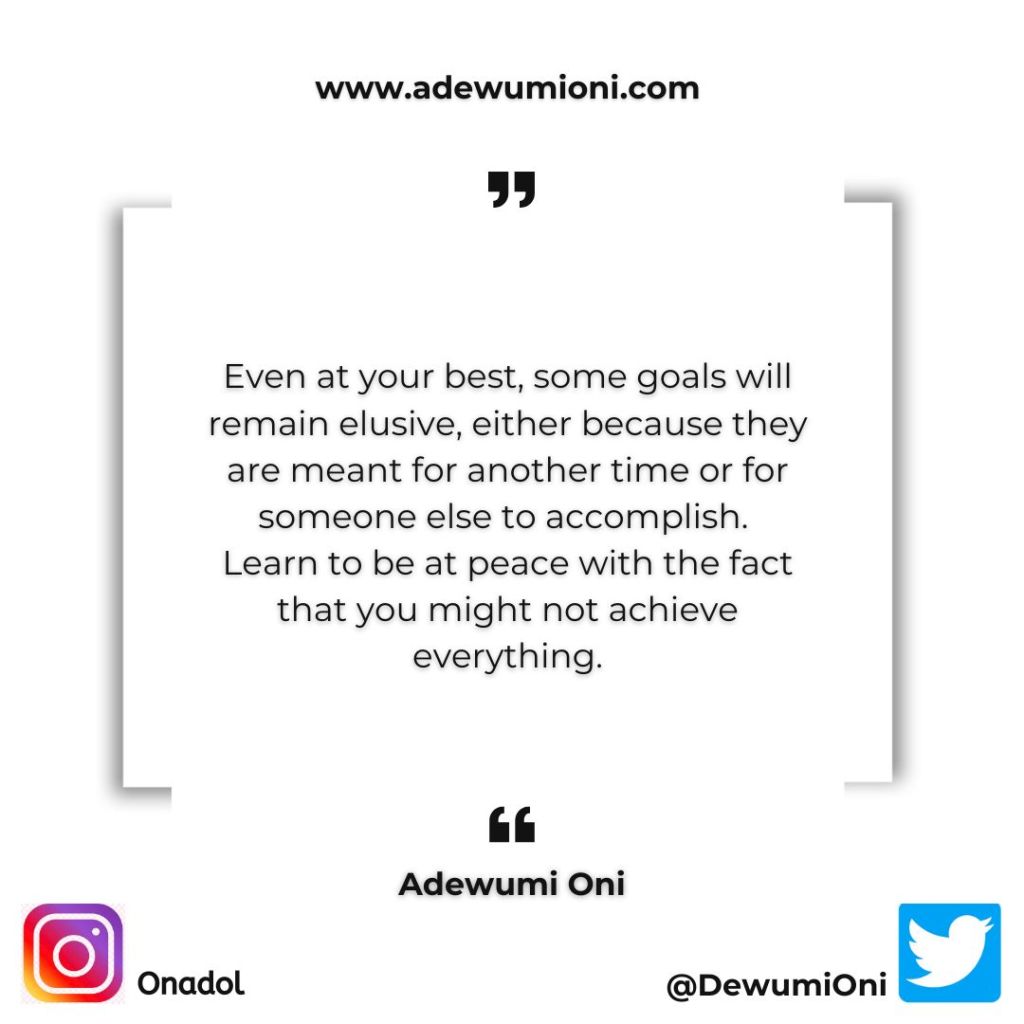
During a fireside chat, in response to a question, she said, “We must learn to live with the fact that there will always be some unachieved goals.” She shared that, in her youth, she didn’t believe this, but now, in her old age, she has come to accept it as a reality.
I reflected on this and grappled with it. How do I discern what I won’t be able to accomplish, and what I should leave for future generations to achieve? While I can’t say I have all the answers, I do agree that we won’t achieve everything before we leave this world—but we must not stop trying.
It’s essential that we do all we can, and if certain goals remain unmet, it shouldn’t be for lack of effort. So, don’t continue blaming yourself if, after giving your best, some things still don’t come to fruition. Find peace within yourself when you’ve done all you can, and it still didn’t happen.
A fitting example is King David, who, despite having the resources, was not permitted to build a tabernacle for God; that role was intended for Solomon.
In closing, recognize what your “best” truly represents. Sometimes, it’s not just about having tried; it’s about having prepared the ground for someone else to reach the goal.




 adewumioni